History of Blackpool and the ‘Foxhall Holiday Village’.
Blackpool’s origins began in medieval times with a just few coastal farmsteads within Layton-with-Warbreck.
Blackpool originally took its name from ‘le pull’, a stream draining Marton Mere and Marton Moss into the sea close to what is now known as ‘Manchester Square’. The peat lands through which the stream ran had the effect of discolouring the water creating a pool of Black water, hence the name 'Black Poole' and eventually ‘Blackpool’.
In the 14th century there was a small settlement at Blackpool, known simply as ‘Pul’. A later map of the settlement (1532) refers to it as ‘the pole howsys’ alias the north howsys.
In 1602 entries in the Bispham parish baptismal register mention both ‘Poole’ and, for the first time, ‘blackpoole’.
Towards the end of the century Edward Tyldesley (the squire of Myerscough and eldest son of the Royalist Sir Thomas Tyldesley) built Foxhall, Blackpool’s first house of any substance.
Friends of the Tyldesley's were among the first visitors to Blackpool and their main activity would have been horse riding on the beach.
In 1745 it is recorded that Elizabeth Byrom and her brother, Edward, spent a day riding on the sands at Blackpool.
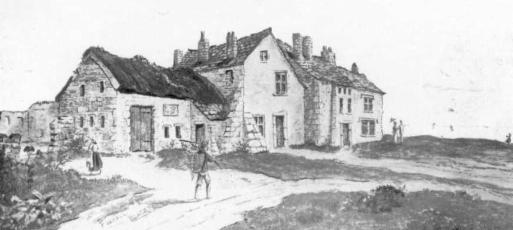
In 1754, while staying overnight at Poulton, Bishop Pococke mentioned in his diary that “at Blackpool, near the sea, there are accommodations for people who come to bathe”. Such people would have undoubtedly been ‘upper class’ and would have stayed at local inns, however, by the late 1780s there were four substantial hotels catering for well-to-do visitors:- Bailey’s (now the Metropole), Forshaw’s (now Clifton Arms), Hudson’s (on the site of Woolworth’s) and Hull’s (on the site of Pricebuster’s store). In addition, accommodation was available at Bonny’s, (King Edward VII, Chapel Street), Elston’s (later the York Hotel) and the Gynn.
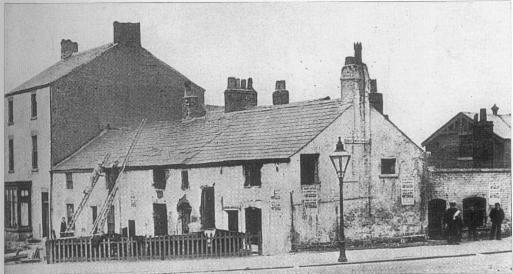
Bonny’s Hotel, built in 1787. Source: ‘Seven Golden Miles’, Kathleen Eyre (1975)
In the early years, travelling to Blackpool would have involved much discomfort and would typically take two days for the journey from Yorkshire and a day from Manchester. This situation was transformed in 1840 when the Preston and Wyre Railway was built to serve Fleetwood’s proposed port at the mouth of the Wyre. The development of Fleetwood soon ground to a halt through lack of capital, and the railway, now on the verge of collapse, was only saved by cheap excursion trains from industrial Lancashire.
The railway reached Blackpool with the opening of Talbot Road station on the 29th April 1846, but the resort was scarcely prepared for the thousands of visitors from Lancashire and Yorkshire who could now reach it with comparative ease.
Gas lighting was provided from 1852 onwards, but piped water was not brought to the town until 1864 when the Fylde Waterworks Company (later the Fylde Water Board) completed its Grizedale Reservoir in the Pennines.
Blackpool’s first pier (the North Pier), designed by Eugenius Birch and built of cast iron on screwed piles, was opened to the public May 21st 1863 and it soon became an exclusive promenade for ‘upper class’ visitors - the pier is now a Listed Building.
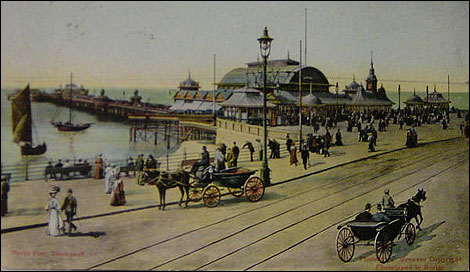
In 1867 the Prince of Wales Arcade opened (now the site of the Tower), and the following year saw the Talbot Road Assembly Rooms, Theatre Royal (Yates’s Wine Lodge and Addison’s night club) and the South Jetty added to the list of attractions.
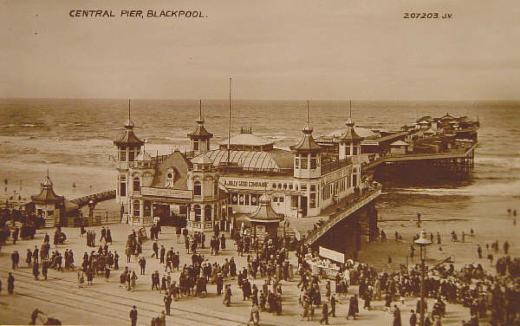
The Central Pier was built in 1868, however it did not become popular until 1870 when Robert Bickerstaffe introduced open-air dancing for the ‘working classes’.
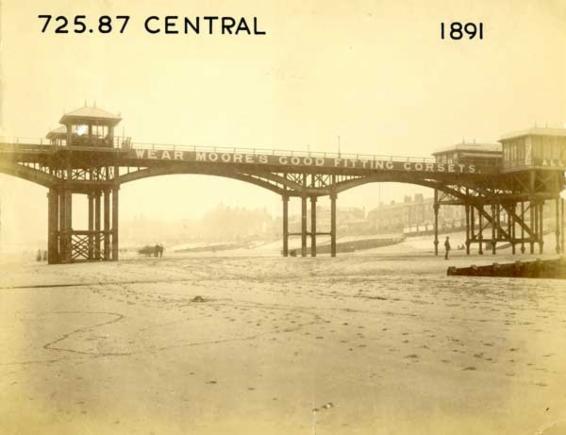
Central Pier - c1891
Through the 1870’s and 1880’s Blackpool started to become extremely popular with ‘working class’ families and the area known as ‘Foxhall Village’ was developed as the world’s first purpose built accommodation specifically for such families.
This area (opposite the Central pier), now known as ‘Foxhall Holiday Village’ is bordered by the Promenade to the west, the Central Corridor to the east, Chapel Street to the North and Rigby Road to the south is still as popular today and due to it’s central location and it’s abundance of well cared for Victorian Guest house and Hotel properties is one of the most sought after areas in Blackpool for family holidays.
Blackpool was granted a Charter of Incorporation as a Borough on the 21st January 1876 and Dr. William Henry Cocker, son of Dr. John Cocker and grandson of Henry Banks, became the first mayor.
Although 1877 saw the opening of the Borough Theatre the following years saw the resort in the midst of a depression, which threatened the future of the whole town.
In 1879, Blackpool achieved the distinction of becoming the first town in the world to have a system of electric-arc street lighting and the Council decided to hold a grand fete and carnival on the beach between the two piers to publicise it’s installation.
This event featured a ‘Naval Attack on Blackpool’ which was watched by up to 100,000 people from the Promenade, piers and ships.
A Carnival was later to become a regular event in Blackpool beginning with the first Carnival in June 1923.
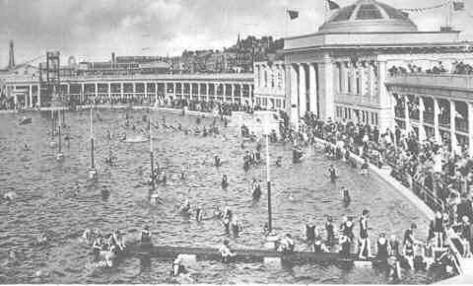
First Blackpool Carnival - c1923
The increasing popularity of the resort forced the Council to examine various transport systems to supplement the town’s horse-buses and landaus. A small electric railway that had been set up in the grounds of the Winter Gardens, led the Council to Michael Holroyd Smith and his conduit system of electric tramway operation.
The country’s first permanent electric street tramway opened on the 29th September 1885 and ran from Cocker Street to South Shore.
In the 1890s it was estimated that Blackpool could accommodate 250,000 holidaymakers as well as the permanent population of 35,000. These visitors required entertaining, and this period saw the development of many of the resort’s famous attractions.
In 1889 the original Opera House was built in the Winter Gardens complex, and two years later in 1891, a start was made on Blackpool Tower (the tower and buildings, which included a circus and ballroom, opened at Whitsuntide 1894).
In 1893 Victoria Pier (now the South Pier) opened and, the following year, the impresario Thomas Sergenson opened his ‘Grand Theatre’ in Church Street.
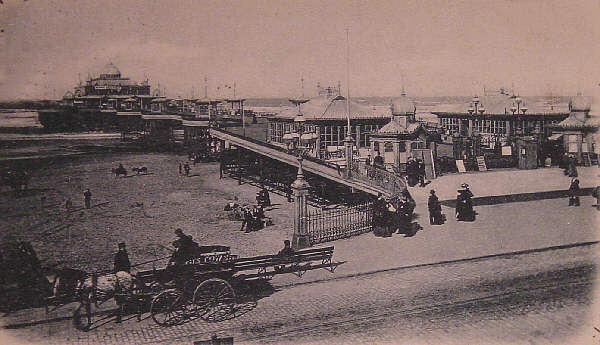
South (Victoria) Pier - c1900
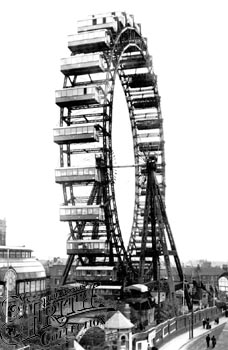
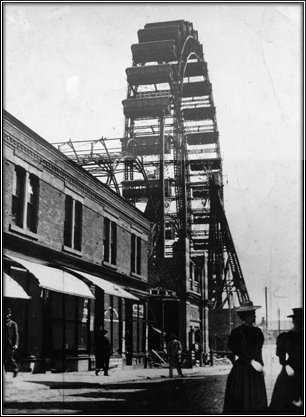
In 1896 the Winter Gardens opened its ‘London Eye’ style ‘Gigantic Wheel’ at the corner of Adelaide Street and Coronation Street. Unfortunately, the 220 feet high wheel, with its 30 carriages holding 30 or more passengers, was never a great success and it made its last trip on 20th October 1928, shortly afterwards it was demolished.
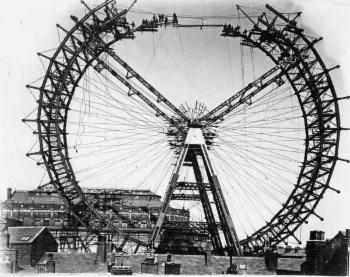
Gigantic Wheel under construction (above). Wheel completed (below) c1896
In 1896, the Winter Gardens opened its huge Empress Ballroom and adjacent Indian Lounge. The Tower Company responded by rebuilding its own pavilion as the famous Tower Ballroom, designed by Frank Matcham which opened in 1899.
The development of the ‘Golden Mile’ began in 1897 when the Corporation banned stalls from the beach and traders moved into the gardens of houses on the Promenade.
The turn of the century saw further development in the town’s transport system when in September 1892 the tramway was taken over by the Corporation. In 1895 it was extended inland along Lytham Road and later connected with the system operated by the ‘Blackpool, St Annes and Lytham Tramway Company Limited’.
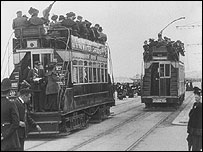
Blackpool Trams - c1904
The private ‘Blackpool and Fleetwood’ Tramroad, running eight miles between Talbot Road Station and Fleetwood Ferry, was opened in July 1898 and soon showed the advantage of the overhead system of power collection. This system was adopted along existing Corporation routes in 1899, on the coastal extension to the Gynn (1900), around Marton (Church Street, Whitegate Drive and Waterloo Road, 1901) and to Layton (1901).
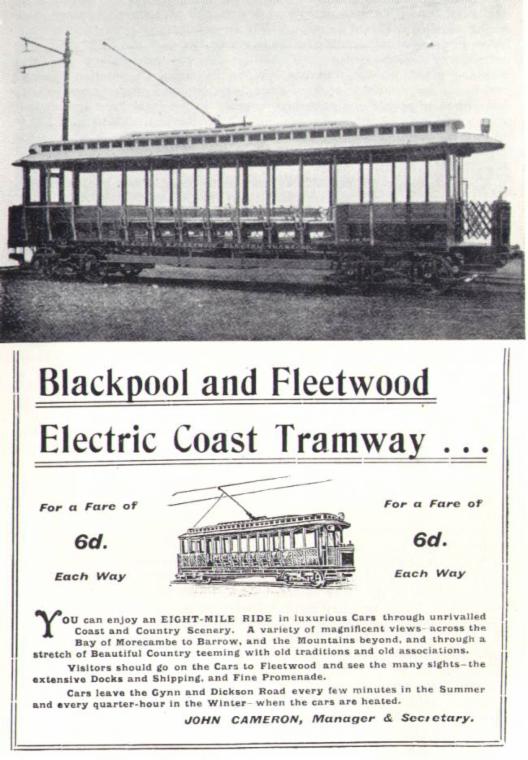
Blackpool and Fleetwood Tram advert - c1904
In later years the Corporation took over the Fleetwood Tramroad (1920) and built the extension to Starr Gate (1926).
The years 1902 to 1905 saw the building of the present Promenade between the North and South Piers, a project that involved reclaiming some 22 acres from the sea. About the same time, the foundations for the Pleasure Beach were laid as the first substantial features were erected in the sand dunes beyond South Shore, for many years the home of gypsies and fairground artists. One of the very first rides, Sir Hiram Maxim’s Captive Flying machine (1904), remains today though in somewhat different guise, but over the years many additional attractions have been added to create the present forty acre fun park.
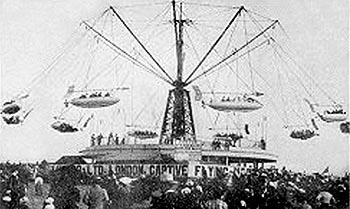
Blackpool Pleasure Beach - Sir Hiram Maxim's Captive Flying machine (c1904)
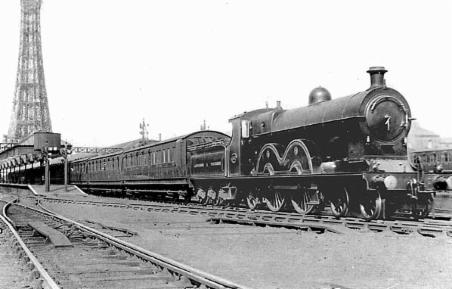
Rail traffic to the resort was so heavy that the existing stations at Talbot Road and Central were rebuilt in 1898 and 1900, and a new direct route opened from Kirkham to South Shore in 1903.
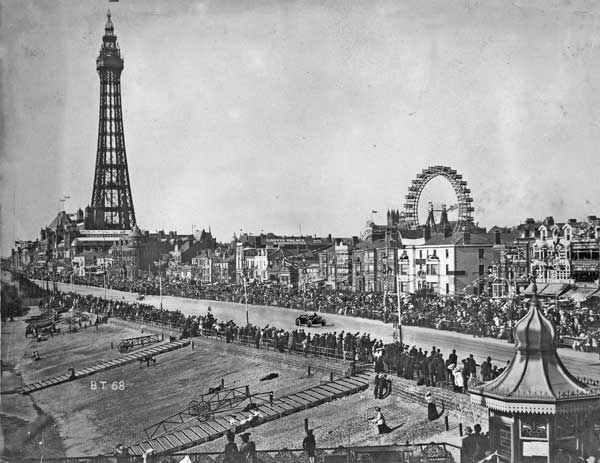
Blackpool held its first motor speed trials on the new Promenade in October 1904 and in October 1909 it staged one of the first aviation meetings in the world, attracting many famous aviators.
The first illuminated trams had been seen in Blackpool as part of the celebrations for Queen Victoria’s Jubilee in 1897, but static illuminations were first erected in 1912, when, on the 2nd May, Princess Louise opened the Princess Parade.
The illuminations were well received, so were revived in late summer. A more ambitious display was produced the following year, a season that broke all records.
The Great War forced the termination of the 1914 illuminations and they were not seen again until 1925.
The illuminations were again discontinued between 1939 and 1948, but in 1949, when fuel restrictions were relaxed, they were revived and still remain one of the town’s great attractions today. Blackpool itself, escaped largely unscathed from the ravages of the Second World War. The first bombs Blackpool saw fell on North Shore golf course in August 1940. The most serious incident came on September 11 when a ‘stick’ of bombs fell near North Station, one was a 500-pounder and Seed Street (off Talbot Road) took the brunt. Eight people were killed and 14 injured.
The 1960s saw the Promenade tram route left as the only commercial electric tramway in the country when the routes along Lytham Road (1961) and around Marton (1962) were replaced by bus services. The link between North Station and the Gynn along Dickson Road closed in 1963.
Additional pictures from Blackpool's bygone era (unless otherwise stated, sources unknown):
 |  |
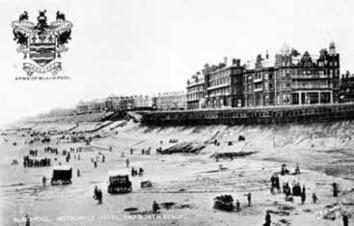
North Shore circa 1905
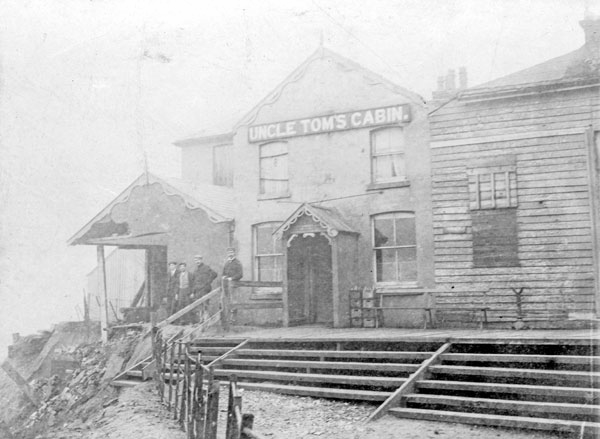
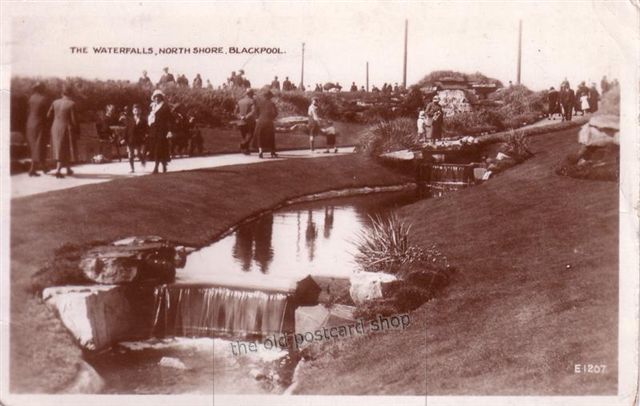
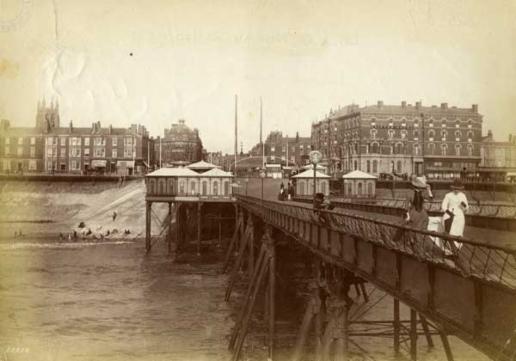
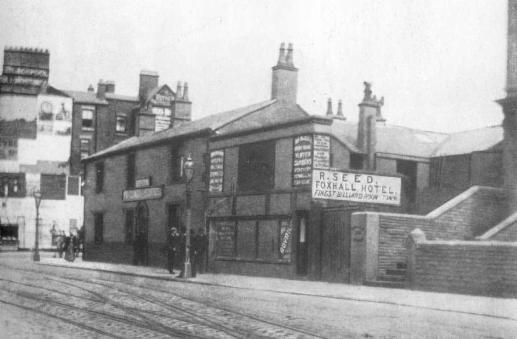 The Foxhall Hotel as seen from the Promenade. Source: ‘Blackpool’s Progress, The Blackpool & Fylde Historical Society (1926)
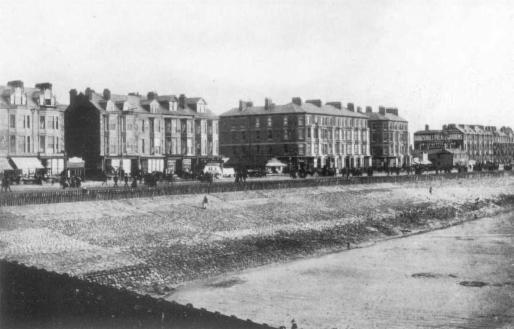
Looking south from Central Pier in the 1890’s, the low building to the right is the Foxhall Hotel. Source: ‘Blackpool’s Progress, The Blackpool & Fylde Historical Society (1926)
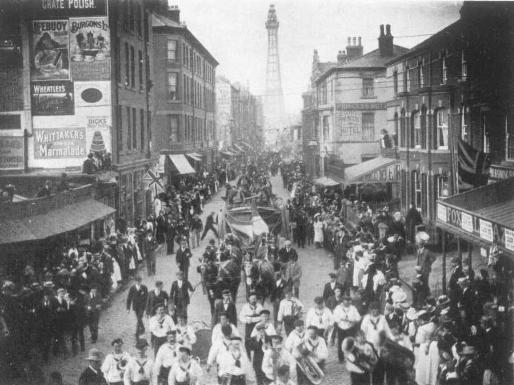
Blackpool’s lifeboat in a parade along Foxhall Road in 1897. Source: ‘Blackpool’s Progress, The Blackpool & Fylde Historical Society (1926)
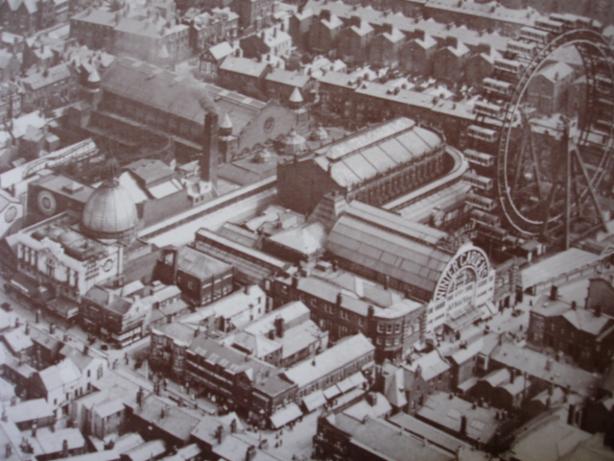
Blackpool’s 'Winter Gardens' from the air (1920)
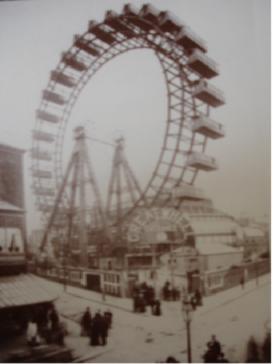
View of Blackpool's 'Great Wheel' (c 1910)
For further information on the history of Blackpool & the Foxhall Village area see the 'then and now' series of video's courtesy of the 'Blackpool Gazette' - Click Here to view.
---------------------------------------------------------------------------------------------------------------------------------
Hope you found this brief History of Blackpool interesting.
Regards,
The Blackpool is best team